
Header image credit: @michee.png
Lady Kabela didn’t start out trying to make something anyone else could listen to. Instead, like plenty of artists, she found her way through music made for no one in particular. That journey across singles and a debut project in 2024 culminated in what she views as the grander 2025 album, He. Its haunting industrial-pop sound makes you feel like you’re living inside a horror film as one idea bleeds into the next. And she clearly can’t stop, as she’s currently working on the next project to continue that exploration.
Tension runs through everything she does. On stage, she can go from sweet to guttural in the space of a breath, a contrast she traces back to growing up with a strict, narrow idea of what a woman was allowed to be. Off stage, she’s found a home in an Asheville scene generous enough to let her hold both halves at once.
With a new record taking shape and a city that’s held her tighter than any other, Kabela is taking the time to build a world around her art, rather than rush the next song out the door.
What have you been listening to lately, whether it’s something new or a longtime favorite?
Kabela: A lot of Lana Del Rey, an old favorite I’ve circled back to. And honestly, I’m constantly listening to weird stuff: Crystal Castles, the new Arca [XXXXX], White Ring.
Going back further, who was the first artist you remember discovering on your own and obsessing over?
Kabela: I didn’t discover Lady Gaga on my own, but I discovered her past the surface on my own. I got into the deep cuts, the stuff my parents weren’t listening to, the unreleased material. Probably also Grimes, or Lana Del Rey again.
I feel like, especially with how things were marketed around singles, back when Lady Gaga was coming up, it was all radio airplay. You couldn’t get the full record across that way.
Kabela: There really was a stretch where people didn’t look past the singles. I feel like now people get a lot more into an artist’s whole body of work. I like that a lot more. I spend a lot of time on my work, and I’m sure other artists do too, and we want people to hear everything.
There’s a lot more artist lore now too, some combination of the internet, social media, and parasocial relationships. Have you felt yourself building your own lore across those releases, or do you tend to think of them as self-contained projects?
Kabela: The first album I put out under this moniker was really just me compiling songs, because I hadn’t done a bigger release in a while. But the second one, He, has this whole big weird world behind it, all sorts of scary-movie vibes, and that’s bleeding into the album I’m working on now.
When you say bleeding into it, do you mean that same creative space, or more of a continuation?
Kabela: The music itself is a lot different, but thematically I feel like I’m completing the cycle I left off with on the last one. I really like world-building in songwriting, and in artistry in general.
I really want to feel like I’m standing out and doing something different, and I think the easiest way to do that is to build the most out-there allegories into the music, even if what’s underneath is stuff other people are already talking about.
When you’re putting together instrumentals, what’s the process of matching what you’re feeling lyrically or thematically with the overall vibe of a track?
Kabela: It really depends. A lot of the time I’ll have a good idea for a song title, and I’ll build around what that title, those lyrics, should be. Sometimes I’ll write lyrics that sound light and airy in my head, and then it just doesn’t translate, so it has to get harsher, more danceable, more upbeat. It’s very back and forth.
For the more emotionally heavy songs, I’m usually driving the emotional quality through the voice first. Those are easier to convey through the actual sound.

Image credit: onlycarluknow
What’s your process for going from identifying a theme to making something feel like more than a collection of songs?
Kabela: The record I mean by “collection of songs” started with me coming up with the most random title one day. The only way I was going to motivate myself to finish something and get it out was to announce it was dropping on a specific date, so I did that with a pretty ridiculous title, and that forced my hand.
With this next album, I’d already written most of the songs and had a bunch of titles floating around in my head, and it felt a lot better to have more time to actually conceptualize instead of just throwing something together. I was reading a lot about history and religion, random stuff like that, and it’s all in there. I draw from a lot of different places.
When you’re performing live, how do you translate the songs and the project into that space?
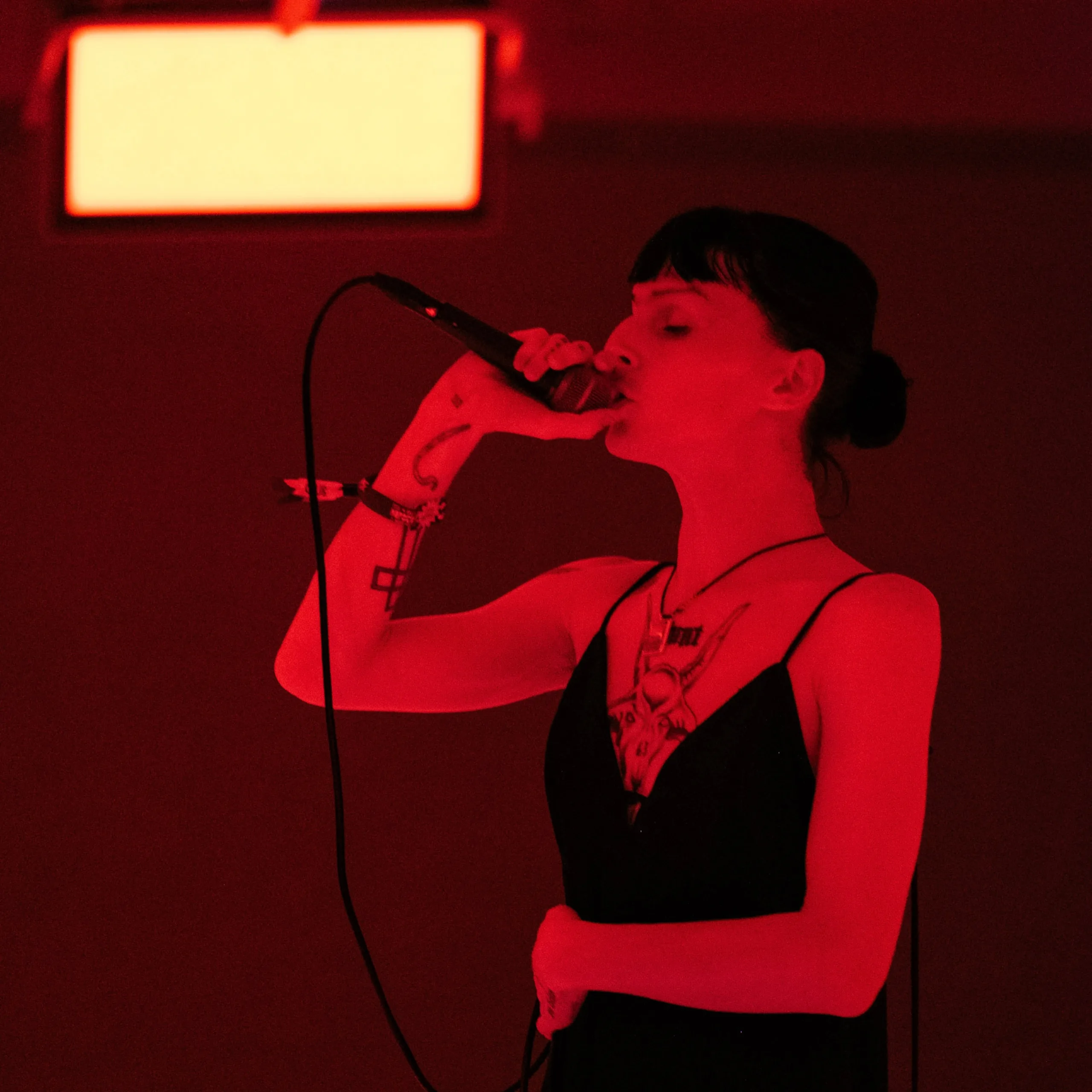
Kabela: I had a band for a little bit, which was really fun. Even though it sounded pretty different live than it does recorded, it felt good to be up there with three guys surrounding me while I’m just being feminine and sweet. I like that juxtaposition, the harshness against the sweetness, and I think it translates either way, even performing solo, because the instrumentals themselves are so harsh and upbeat while I’m doing my thing.
What draws you to that juxtaposition specifically? The satisfaction you get from making the music, or the inspiration behind it?
Kabela: Being a trans woman, I always felt pushed toward being really masculine growing up. There was a very clear-cut definition of what womanhood was supposed to look like, and I was expected to fall into it. So I like bending what people want or expect out of a person.
There are shows where I’ll growl into the mic, super aggressive, low and bassy, and throw people off. It gives me the chance to just go with what I’m actually feeling that day. Maybe I want to be low and bassy because it was a shit day, and instead of forcing something else, I can just go with where I’m actually at. It gives you flexibility. There can be these fourth-wall breaks in performing too, where you don’t have to fully submit to what you think you’re supposed to be doing.
As you keep working on the new project, are you noticing yourself heading in a direction, or picking up on variation that wasn’t there before?
Kabela: This album is definitely still trying to be experimental, but in a more conventional way, which is arguably the most experimental thing I’ve done, since the only music I’ve made before this was weird stuff on my computer. Trying to make something that’s actually listenable is weird and challenging, but fun.
What’s your experience been like coming up in the Asheville scene, working with musicians there versus other communities you’ve had experience with, in North Carolina or elsewhere?
Kabela: Asheville has held me the tightest, I’d say. I’m originally from upstate New York, way out from any city, arguably more of a country vibe than some spots down here, so Asheville is the first real city I’ve lived in. My friends at the Genesee Grotto, a house venue that’s actually shutting down this month, have been so great. They’ve done so many shows where they fundraise for people, and just done cool stuff generally, along with the guys from Socialist Anxiety, who my boyfriend plays in.
I played my first show here at UNCA, in their garden, which was really pretty. The Asheville scene has been wonderful. I’ve felt very held by the people here.
Any local artists or venues, beyond who you’ve already named, you want to shout out?
Kabela: Shout out Haunt3d out of Charlotte. Shout out to Sly Grog Lounge, I really like that space. Shout out my friend Viesna, she’s a DJ, and she’s so good. Some of the best shows I’ve played, she DJ’d before my set. And shout out to Geddi Monroe, an amazing photographer.
This interview has been edited for length and clarity.


Leave a Reply