
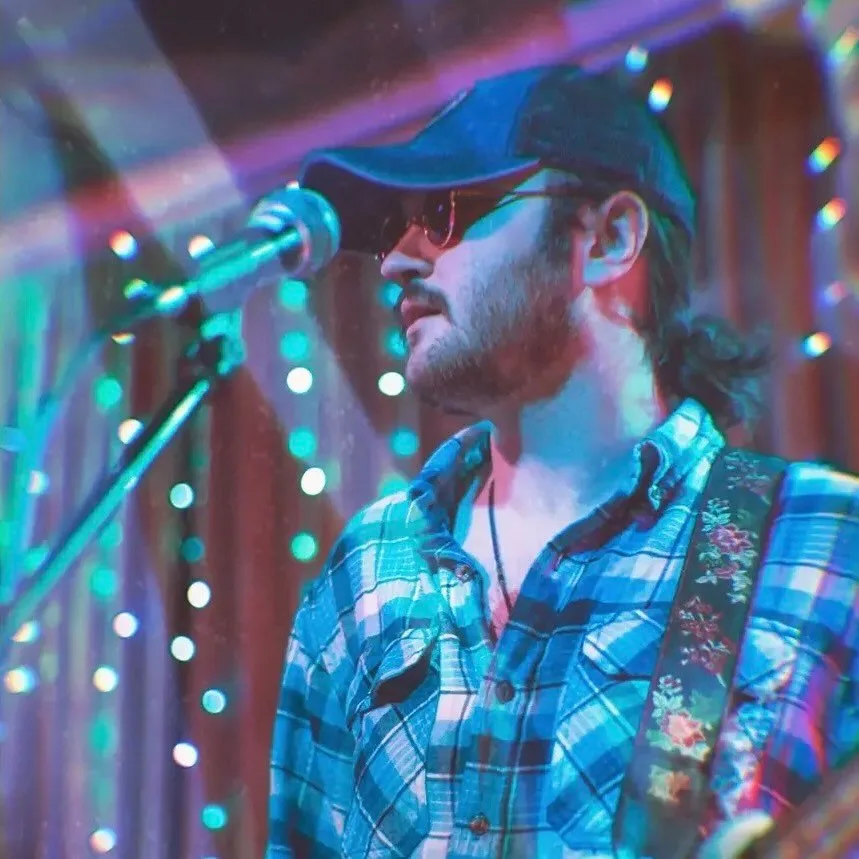
Zak Johnson started self-releasing music at 17, with no guide and no money for the distributors that make streaming look easy. In Tazewell, Virginia, where Zak grew up, there was barely a scene to speak of, and friends kept asking him how he did it. He answered those questions for years, learning firsthand that advice isn’t what bands want from a record label. They want shows, physical copies, and someone willing to vouch for them.
A year of booking, pressing CDs, and untangling rights and payouts for his Asheville-based band Alla Prima gave him the knowledge he needed. All of that feeds into the launch of Fibberwocky Records and its “for the people” business model. There are no monthly fees, no percentage of show money, and artists keep every right to their music, whether they stay for one service or all of them. Instead of scouting talent, Zak is waiting for bands to find him, like The Moon Ringers from Durham, who just signed on as the label’s second act.
With a clear passion fueling the venture, I was eager to dig into how Zak decides who to work with, where he sees the label growing, and what success looks like in the short and long term.
You’ve mentioned that your years of experience self-releasing music helped fuel this project. What’s something about that process you wish you’d known when you first started releasing music, that you’re now applying to the label?
Zak: I’ve been self-releasing music since I was 17, and I’m 25 now. One of the main things I’ve learned through releasing music, especially through streaming, is how easy it can be, but also how expensive it can be. Distributors like TuneCore or SoundDrop, which I used at the beginning, all cost money, and when you’re 17, you don’t really have any of that.
So one thing I’ve learned is that you don’t necessarily need a label, but it’s good to have somebody in your corner to guide you through the process. I didn’t know where to start at 17. Once I started releasing music more regularly, a lot of people started asking how I was doing it, and I wanted to be that person who doesn’t charge for that kind of help. I just want to help people get to the point where they’re releasing music regularly on their own, without having to stress about it.
What was the catalyst, the specific moment where you decided this was a direction you wanted to go, and something you wanted to offer other bands?
Zak: Around that same time, when I was 17 or 18, I had a lot of people in my hometown of Tazewell, Virginia, where there isn’t much of a music scene, who were interested in releasing their own music would ask me how to do it.
I’ve tried starting record labels since then, but I kept running into the same roadblock: I wanted to offer more than just advice – things like booking shows and physical distribution – which is what people actually look for when they want to get with a label. I think the real starting point came after a year of doing work for Alla Prima.
I’d learned a lot about booking, physical distribution, streaming, and how rights and payouts work. And I was still getting asked those same questions: how are you booking so many shows, how are you getting CDs made, how are you doing all this? So I figured, let’s just start a label that can help people directly instead of just walking them through it step by step.
Doing that kind of work for even one band can eat up a lot of time. You have to really love it to want to do it for other musicians too.
Zak: Absolutely. We’ve played with a lot of great bands and been on a lot of great bills, and one thing I noticed is that a lot of these bands aren’t playing out as often as they should. I want to help them get more exposure, because that’s what they deserve. I love music, and I love the bands we’ve been seeing, so that’s what drives me. I tell people who reach out to the label: I do it all for the love of the game.
Of distribution, booking, and physical runs, which do you feel is the biggest bottleneck? And what’s your pitch to a band for how you eliminate that hurdle?
Zak: I tell them we start small. Maybe one to two shows a month in the area they’re already prominent in. So if they’re a Nashville band, let’s get them playing more in Nashville, then start expanding, maybe from one to two shows a month to a weekend tour every month, three or four shows. Then it’s Asheville to Charlotte to Raleigh-Durham, or wherever the direction makes sense for them, kind of like how we did it with Alla Prima. We took any show that would have us at first, but we really planted our foot down in Western North Carolina.
That’s what I always tell bands: start small, then build from there. A lot of bands that reach out say they just want to start with one to two shows a month, and I tell them we can start there and build up whenever they’re ready.
I think what’s important is that this doesn’t come off as a sales pitch, more like there’s a gap in who’s doing this kind of labor, and if it gets more people playing shows and releasing music, that’s a win.
Zak: Exactly. People have the choice within the label. If they just want distribution, I’ll handle that on the back end, and they keep 100 percent of the rights to their music. I’m never going to tell someone they can’t use their music elsewhere, and if they ever leave the label, I don’t have any say over what they do with it afterward. They can choose just one service or all of them. Right now I’m not really approaching bands; I’m letting them come to me, and that tells me what they actually want so I can go from there.
When a band sends you a DM or their music, what’s your process? What are you listening for, or what stands out to you?
Zak: I’m not looking for a particular sound or a particular standard. If the music’s good, or if you can tell there’s heart in it, I’m willing to work with it, whether it’s noise, pop, trap, whatever. What I always ask is what they’re specifically looking for: booking, physical or streaming distribution, someone to vouch for them, or all of it. Then we go from there. We’re not looking for a particular sound. We’re just helping whoever needs help.
Are the artists you work with all North Carolina based?
Zak: No, not at all. I don’t care if they’re in North Carolina, Virginia, New York, anywhere. If they’re interested in working with the label, I’m interested in working with them. I want to hear what their goals are, what their dreams are, and figure out what we can do.
Do you see word of mouth as the primary driver of growth, or are there bands you’d want to reach out to directly if you loved their music?
Zak: For sure. If I’m at a show, or we’re on a bill with a band, and I notice they don’t have anything out on streaming, I’d reach out to them right then. But right now I’m letting bands come to me. It lets me get started slowly and see who’s actually interested, and whether it’s something worth continuing five years down the line.
Thinking about a year from now, how do you define a win for the label at this early stage?
Zak: If we had even one or two bands playing regularly, the way we’ve discussed, or releasing regularly under the label, that’s a win. If it stayed at one or two artists for five years, I’d still work with them. I think at that point I could settle into it. To me, success is helping at least one person. I’d also call it a success if an artist has been with us for a while, learned a lot, and wants to go do their own thing while keeping the relationship. That frees up capacity to help a newer act.
Even if Alla Prima ends up being the only band I ever helped grow, and I know that’s an obvious one since I’m in the band, I’d still be happy with that. The satisfaction I’ve felt helping Alla Prima get shows and opportunities is just as real as helping three, four, or a thousand bands.
What’s your approach to taking on the cost of physical releases, and making that accessible for artists?
Zak: For now it’s going to be short runs, more on-demand. I haven’t gotten it fully set up yet, but I’ll have a Bandcamp label page where we sell CDs and cassettes on demand. I’ll also buy a batch upfront, say 50 CDs, for a band to sell at their shows, and they keep all of those profits. The label takes only a small percentage of sales through the website or label page. It’s really just investing in them, giving them the opportunity to sell CDs, cassettes, and eventually maybe seven-inch vinyl. I understand how expensive that stuff is, and if I have the means to provide it, I will.
Where did the name Fibberwocky come from?
Zak: Before I had a label, or really anything, it was just a word I made up, based on “Jabberwocky,” the poem. I liked the way it flowed. It was actually the name of a song I’d written a while back, and I liked the name so much I thought, “Fibberwocky Records” has a nice ring to it. It’s different, and you can’t find the word used anywhere else.
Anything else you want to mention before we wrap up?
Zak: Just that we’re here to help artists, no matter how small or big they are. We’re here for the love of the game, not to charge anybody. I always tell artists who reach out that it’s going to be a process, it’s not going to happen immediately, but we’ll work together toward their goal. I don’t feel right charging someone a monthly fee for booking, or taking a cut of what they make from a show. I’m not doing any of that. I’m in it strictly for the love of the game.
This interview has been edited for length and clarity.

Leave a Reply