
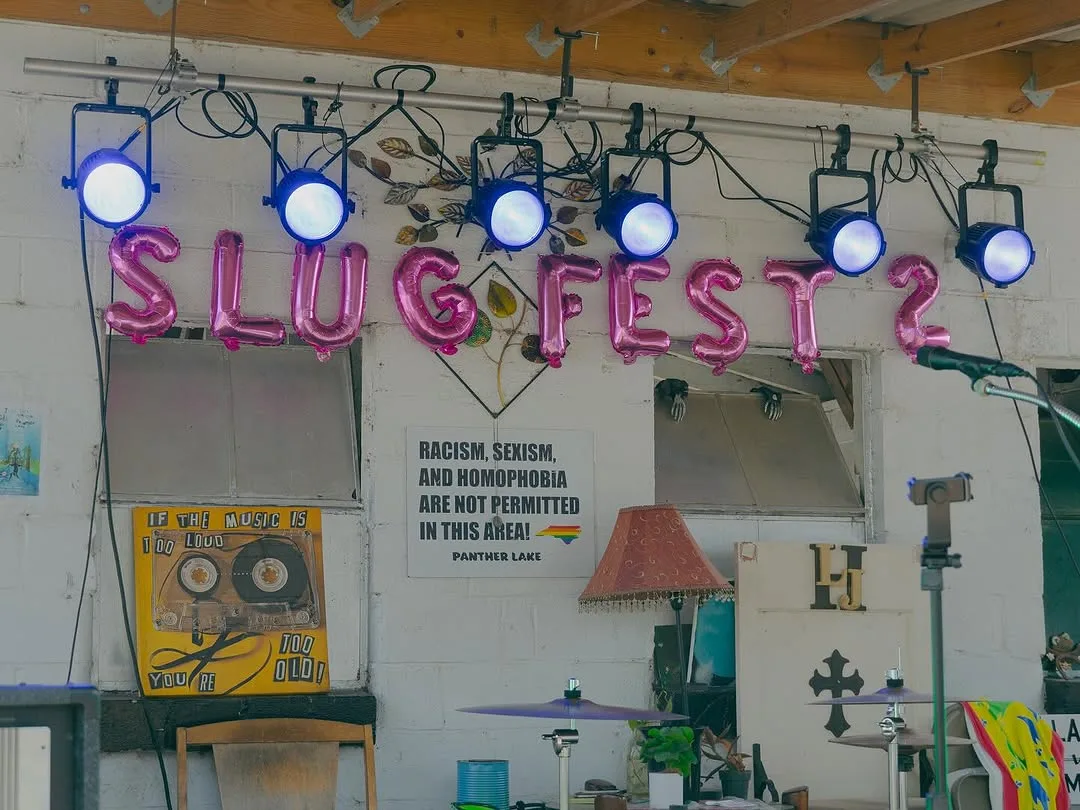
Header image credit: @err0rrr0_
When you think of a music festival, it’s easy to picture a big outdoor space with multiple stages, long bathroom lines, and water starting at $10. It’s no surprise that major music festivals are struggling, leaving room for local DIY events to carve out their niche. Look no further than SLUGFEST: a queer anti-folk festival organized by Raleigh’s Boygirl Rising that combines art, food, and camping by Panther Lake.
The event, which expanded to a whole weekend on May 31 and June 1, was built with the local community at heart. “A lot of the festivals in our niche genre tend to happen in the Northeast and sometimes the Midwest. You don’t really see a whole lot of folk punk festivals in the Carolinas or Georgia,” Gilligan says. “We’re hoping to make this a community space for that.”
For the second straight year, they did just that.

Unlike last year’s inaugural event, Gilligan and Ocean had a foundation to build upon. They knew they could draw people to a DIY music festival in rural North Carolina; 130 attendees proved that in 2024. Panther Lake had proven to be a successful location (despite drawing the attention of the police for breaking curfew), and they had ideas to offer more resources to their community. Most notable were the expanded harm reduction efforts, like having AIDS Alliance for on-site STI testing and a supply of naloxone in partnership with Musicians for Overdose Prevention.
Expanding to two days meant more than double the performance slots, some of which were filled by local and touring acts who had played Slugfest 2024 and wanted to return. But the objective measure of success was in the numbers. “The turnout practically tripled from last year,” says Brendan Patrick Sheard, who performs as Pat van Buren and played throughout the weekend’s lineup.
The weekend’s musical talent proved to be a testament to Gilligan and Ocean’s networking skills. Artists from as near as South Carolina (Henry Luther & The Blackouts) and Richmond, Virginia (Americans Abroad) to Florida (Dumpster Meds), Indiana (The Last Arizona), Texas (Stormi Montana), and beyond made the trip out. Marble Berry Seeds, M. B. Mulkey, and Rumbletramp were among those who represented the Triangle, lending to a whole cross-pollination vibe between such geographically diverse scenes.

In practice, the lineup genuinely reflected the breadth and depth of anti-folk and folk punk. There was a mix of full bands and intimate singer-songwriters, with no two performances feeling similar. Twangy alt-country flowed into frenetic folk-punk ballads, from couples and friends dancing together to hardcore punk two-stepping and impromptu mosh pits. Folks like me listened and observed while others enjoyed the lake.
Many attendees chose to camp on-site for the weekend, ranging from standard tents and DIY car beds to modest campers. The $20 donation-based camping option — part of the festival’s “NOTAFLOF” (No One Turned Away For Lack Of Funds) ethos — created a different dynamic than the previous year’s day-only format. People weren’t rushing home after the last set; instead, they were settling in for what felt like a gay summer camp weekend.
“The community here is so wonderful,” Gilligan says. “Last night, multiple people cooked dinner for everybody. There was some fun song trading after the show formally ended. Everybody camping out seemed like they had a great time.”
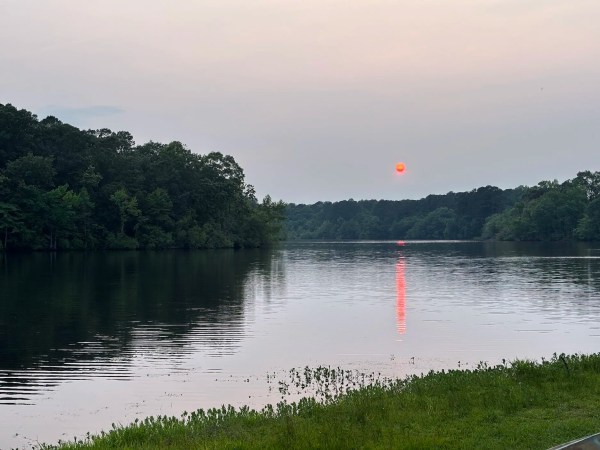
That communal spirit extended beyond the music. Anita’s made the trip up from Greenville, NC, to serve fresh, flavorful Mexican food with serious heat. Some folks were out on Panther Lake’s pedal boats or fished between sets. It made my time feel like a retreat rather than coming out for a show.

Image credit: err0rrr0_
Of course, it wouldn’t be an event in the South if rain didn’t get involved in some way. A severe thunderstorm had been rolling across the state all afternoon and hit around 6 pm, just as Saturday’s performances were hitting their stride. Hilariously, I was in the bathroom as festival-goers started scrambling for cover. A friendly stranger held the door closed through fierce winds, leading me to repay them (and get walloped by rain).
I escaped to my car, assessed how damp I was (very), and made my soggy departure to Durham. But the rain was a mere bump for Gilligan, Ocean, and the other organizers. Attendees huddled together under any available shelter and sang along to unplugged performances until the rain stopped.
For less committed organizers or a less tight-knit community, that could have spelled disaster. But instead, it became another opportunity for the collaborative spirit to shine.
The increased attendance brought both celebration and careful planning. Gilligan emphasized the importance of making sure performers and vendors went home with fair compensation. “Our pre-sales were great, but I’ve been pleasantly surprised to see door sales too. We get to send folks home with some cash. I want to do this again next year, so we have to make sure everybody gets paid.”
That focus on sustainability shows that SLUGFEST is committed to addressing a key challenge many festivals have struggled with: how to grow without compromising the qualities that made them special in the first place. For Ocean, maintaining the feeling of these first two events is a top priority. “Vibes are good and very gay. That’s how I know it’s been a successful weekend.”
Despite the larger crowd, the weekend felt like a family reunion. Every performance was eagerly supported. Friendships were rekindled, new ones were formed, and Lord knows how many future shows or tours got booked. As Sunday afternoon wound down, campers began the reluctant process of packing up and saying heartfelt goodbyes that I couldn’t help but feel.

Image credit: err0rrr0_
The success of this year’s event will undoubtedly turn Gilligan and Ocean’s attention towards next year. And if this weekend was any indication, they will continue to push the values that created the community in the first place: accessibility, community care, and mutual aid.
Well, that, and the fact that the best festivals are those where community is an integral part.

Leave a Reply