
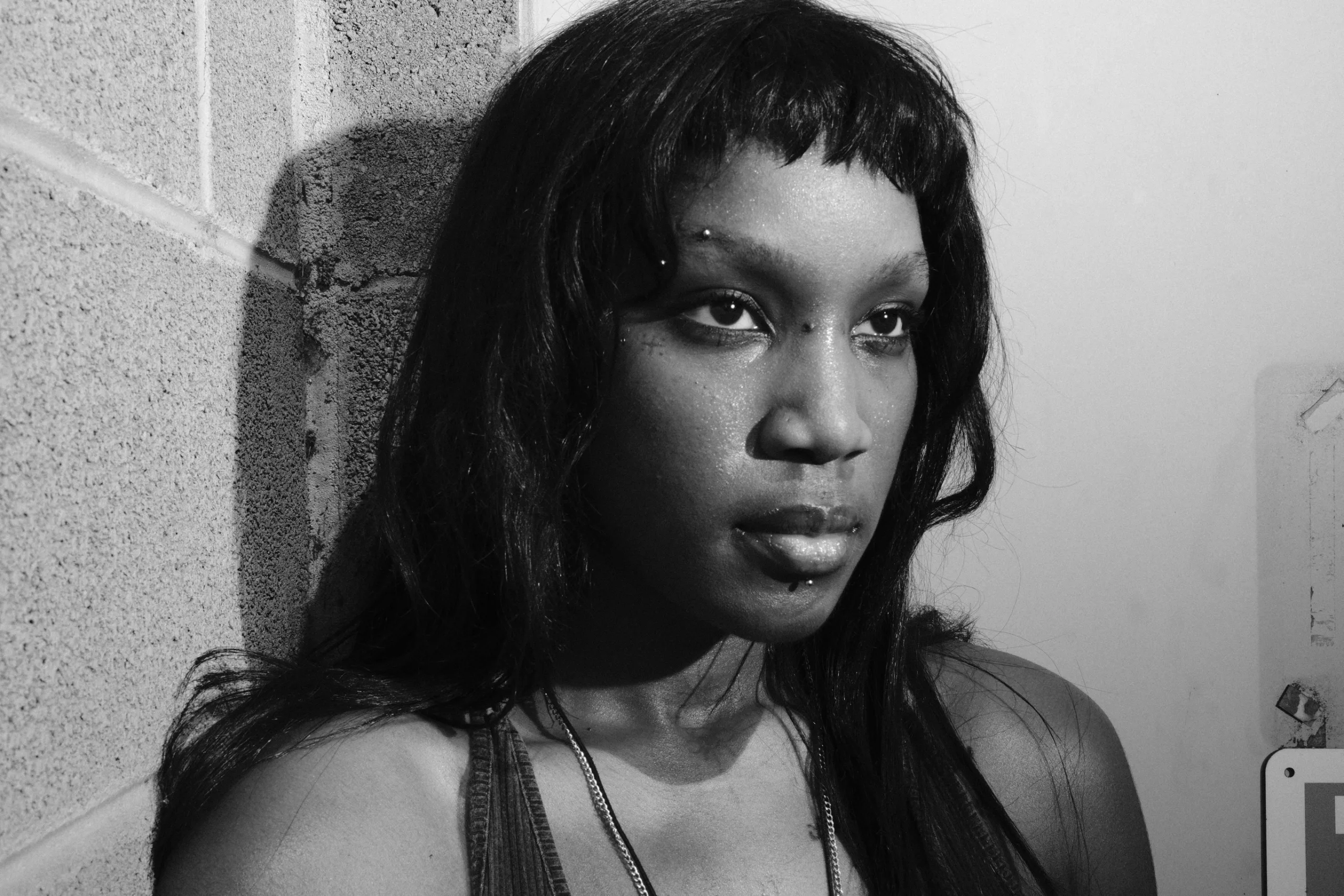
It’s June 18th.
I’m waiting for Aumnï at our agreed-upon spot, gazing again at my list of questions. I’m extremely early. My sense of time slips away when I’m nervous.
A week before we met, Aumnï uploaded a clip of her interview with WCNC Charlotte, where she talked through the idea of the dance floor as a liberatory space. “People are very afraid to dance…being self-conscious comes from how people grew up as children…when you fight against that in your brain, that is an act of resistance.”
Historically, the dance floor has never been politically neutral. Black scenes in the ‘70s and ‘80s laid the foundation for many genres that followed. LGBTQ+ bars amplified songs that rarely got radio play. History has been shaped at the discotheque.
The music, and more importantly, the people associated with it, became scapegoats. Representative of all the pitfalls of modern culture. Disco vinyls burned in dumpsters, Queer bars raided. This behavior is found throughout history, but isn’t confined to it. Just over a week ago, ICE raided a Memphis nightclub, detaining more than 120 people. People gathering to unwind from the week, dehumanized and ripped from their communities.
Where marginalized people congregate, there is a spatial disruption of the status quo. In response comes cruel opposition.
Understanding this, I still couldn’t help but feel a slight edge of cynicism. How can dance liberate us? Should it? I am happier dancing, but what is created on the floor beyond individual expression? On the eve of one of the most important Black holidays, I was desperate for an answer that would assuage my doubts.
Aumnï is walking towards me now, a slight smile on her face. The clouds are thick in the sky, but do nothing to save us from the weight of the heat. We duck inside to cool ourselves off and talk through her ideas of radical dance spaces.
Where are you from, and how did you start DJing?
Aumnï: I say from Charlotte, but I was born in Okaloosa, Florida, on a military base. We moved to Texas when I was a baby, and I started kindergarten in Charlotte. I went to performance art school here – Northwest. After I graduated high school, I started producing on Ableton. I remember I went to a mutual friend’s house, and they all were taking turns DJing while I was watching. I said to myself “That’s kind of fun,” but I didn’t try anything that day. I went home, and I saw this Boiler Room set; everyone looked like they were having so much fun. I had extra money from my school refund, and I bought a DJ deck and taught myself,
Your visuals are something that I’m very intrigued by. Could you just talk a little bit about the process of creating a visual?
Aumnï: I get my ideas randomly. So whenever it comes, and I feel it, I try to go ahead and work on it, so I can, like, flush it out. I spend a lot of time, like, on the internet, on my laptop, looking through internet archives and really old YouTube videos. Films, even screen-recording things I see on social media. Memes.
I really love experimental films. I go to Goodyear Arts. They have experimental film showcases sometimes. I saw one by Stan Brackage. I just really love his use of color; he paints on strips of film using watercolor or ink. Then when you put it through a roll, it creates crazy stuff. I wanted to do something just like that, but I didn’t have access to film rolls and all of that. So I was like, let me just search on the internet to see what feels like what I saw. I found that overlaying blends the footage you have together in a really cool way. I just edit in different ways and see where it goes. A lot of the time there’s a story I’m trying to encapsulate. I don’t really know what it is until I watch it from beginning to end.
The piece you were involved in – America is a Dog – that was very experimental. How did you get involved in that?
Aumnï: America is a Dog is one of the first performance art projects I’ve ever done. I did it with my friend Mono Feo, who is an artist here in Charlotte. Before we became friends, I went to this midnight movie showing, and he does these hour-long showcases where people submit very campy, avant-garde, DIY, short films of any type of experimental shit. After that, I reached out ’cause I always, I always wanted to be a performance artist; I just didn’t know where to start.
So I hit him up, and he said he actually needed someone for his promo video for America is a Dog. He told me the concept, and I fully understood it, but there weren’t many details about what exactly I would be doing. He wanted it to feel very weird and borderline erotic in a way. It’s kind of hard for me to… describe anything else to it. It was a cool experience. I was just like, ‘this is exactly the type of stuff I want to be doing, the type of art I want to be creating.’ We were in some random niggas warehouse to, like, 1:30 in the morning. I’m dressed like a dog, It didn’t really phase me.

It is now Juneteenth.
As is typical for the middle of a southern June, the sun’s presence is still felt long after it has set. Outside of Snug Harbor, there is a buzz that cuts through the thick humidity. It’s the kind of bass you feel in your chest before fully hearing it. Scene Report is underway – a copy of the Juneteenth-themed flyer stapled on a pole directly in front of the patio. Scene Report is Aumnï’s performance series, described as an “Intentional dance space rooted in community.”
The mood board before the event was evocative of a nostalgic Blackness. Older cousins showing younger family members dance moves they replicated after watching 106-and-park. Images of Ghetto Fabulous and Nollywood women next to each other, in defiance of respectability. The people trailing into the venue were seeped in all of this. Walking reminders of who really sets the trends. Colorful hair, neon tights, and an absence of any layer that could potentially impede on full movement. Bangles clacked in sync to club beats.
Do you see DJing as a sort of performance art? How do you connect you on the stage, creating this experience for people with that desire to want to be a performance artist?
Aumnï: That’s exactly what I do, in a way. I’ve always watched performance art – the one person people know, Marina Abramović, and her piece where she let people do whatever they wanted to her body. I don’t agree with all of her [political] sentiments, but I would wonder what it’s like to be in that same position. A lot of her pieces are grounded in her being a woman. How does that get compounded when you factor in race to that? There are sets that I’ve done that are very experimental. I think the performance art aspect of that is, letting people [go] on an auditory journey that they weren’t expecting. You came here to shake your ass. But now, you’re also shaking your ass, but feeling emotional? Or, going “damn, I’ve never heard this before.”
How do you see the role of the audience in your work? How do you see them existing in that space?
Aumnï: Be a willing participant. One of my pet peeves is when people are not present at a party. If we’re at a rave, let’s be at a rave. Let’s immerse ourselves in the experience of being here, in this environment, in this moment. Because I have that pet peeve, I suggest people who come to my sets be present in the moment, and let yourself feel whatever you’re experiencing in real time.
Everyone has a layer of sweat clinging to their skin. There isn’t a second where the dance floor has a gap. When people take breaks, a new wave of bodies surges forward and maintains the energy. Aumnï has transitioned into the start of her set. She’s bobbing along to the BPM, grinning whenever a laudatory exclamation comes from the dance floor. It’s a clean mix. You can see the control it requires to create the sounds made – and it is matched by the dancers. People give it their all, and leave it on the worn wooden floor. The rainbow stage lights reflect off of the crowd. Call and response.
It’s now 11:44. My friends and I take a break from the interior lights and find ourselves face to face with the unfortunately familiar white and yellow light bar of a tow truck. There’s a small wave of panic from other partygoers trying to figure out whose car is being hauled off to the lot. We rush to our spot next door.
It’s empty.
There’s a bit of cosmic irony as a Jersey Club remix of “Knuck if you Buck” bleeds through the walls. In between calling the tow company and lamenting the loss of our transportation, we talk a bit with a Snug employee near the door. “I’m not sure why they’re taking the cars. We have a deal with the people who own that parking lot.” It’s the kind of disruption that makes you realize how fragile a sense of security is. Our car has been held for ransom for $900 we don’t have.
Nothing left to do but dance through it.

There’s a SoundCloud track that you have, “sometimes you just gotta dance through it.” When you’re making a track, what do you envision it doing? How do you see it entering the world?
Aumnï: Ooh, wow. That’s a good question. I’m in different moods that I try to put into some type of physical form. Usually when I make mixes, I just try to find songs that equal the feeling that I want to feel if I listen back to it. Then off of that, I would feel the world around it – the world being, different genres or different producers that are included in the mix. In general the whole world I’m building is exploring different parts of myself and different emotions. It reflects whatever time I was in.
I find that beautiful, that artists share pieces of themselves with the audience, and then the audience will also interpret that and process their own thing, it just kind of iterates…
Aumnï: And then the connection was made in the process. Now that I reflect on it, one of my ways of coping is dancing, going to raves; there have been a lot of times in my life where I was Going. Through. It. I would go on my phone to find a random event. I wouldn’t care if I had to go by myself. I’m pulling up. I just wanna dance. I remember going to the Milestone where they had the Sidequest rave – It felt so euphoric. The lights, the fog. I was like, this is exactly what I needed.
These other artists that you enjoy, what about their work that you tend to connect to?
Aumnï: I think I, like, I really like artists who put their humanity on the forefront, like Nina Simone. She shared so much of herself with the world and went through so much. FKA Twigs, James Blake. Those are a few artists who are very vulnerable and transparent, and work hard to create their world, whether it’s through sound or whether it’s through visuals. Every artist I really admire, when you listen to their music, you are transported to their world.
In these dance subcultures, women have been at the forefront of the sound. Give me some of your thoughts on what it means to you to have a marginalized identity within this space.
Aumnï: I think fly women… Black femmes films have been on the forefront. Been here since the beginning, whether people want to attribute it to us or not. I feel like a lot of us are feeling like we don’t care about public recognition anymore. So we do our own shows and build a community off of that, instead of playing the game that they tell us we have to play.
I’m still figuring it out myself, ’cause I don’t believe I have limitations. But people do treat me differently because I’m a Black woman. I’m not kissing butt, and I’m not watering that down for people to be able to consume it. A lot of people are scared to explore themselves. So when they have a person in front of them who is doing that, they don’t really know what to do with it. I just want, hopefully, for the more things I do, [for] people to become more open to it and through that, become more open to themselves.
It’s now June 20th.
I’ve sweated most of my makeup off, and shelled out a painful amount of money for an Uber. It didn’t feel crushing though, the pain. My muscles feel relaxed, and I still have a surge of endorphins running through me. I slept really good that morning.
The night wasn’t an escape. But liberation never really is. To deconstruct something you have to face it. Scene Report was a confrontation, asking its participants to confront themselves, confront the space, feel joy and be present. Joy on its own is not liberation, but joy and dance make us aware of the space we aren’t normally able to take up. It imagines public space as less restrictive, and welcoming to self-expression. Where culture challenges what’s normal, where it allows new ideas to be generated and enacted, there is liberatory potential.
It only takes a spark to start a blaze.
This interview has been edited for length and clarity.

Leave a Reply