
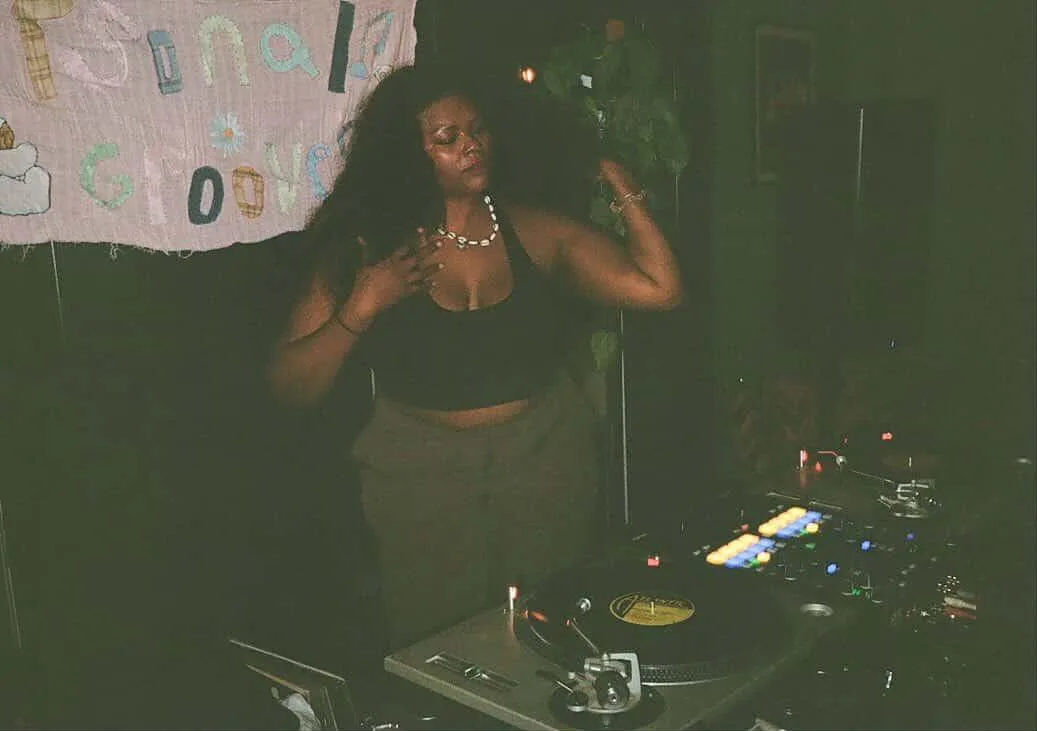
Header image credit: Caleb Allen
The word “funk” has two origins. First documented in English in 1620, it was derived from the Latin word fumigare (meaning “to smoke”). By 1784, funky was used to mean “musty”, or a sense of “earthiness”. In a culture increasingly invested in promoting ideas of “cleanliness” and “purity,” particularly among young people, the insistence on cleanliness becomes especially striking when we consider America’s history.
There is nothing clean about America. Not its history, not its hands, and certainly not the violence committed in its name. Like other imperialist superpowers, America has carefully constructed an image of reigning order, innocence, and purity despite a history deeply marked by violence and exploitation. In this sense, cleanliness is an illusion. Where pristine white baseboards and picket fences ring clean with fresh new area codes, plastered over dirty graves encrusted with unsettled memories of the past and heralding truths of the present.
Historically, in white communities, “funk” often carried negative connotations associated with body odor or being in a bad mood. The term was also used to reinforce racial stereotypes about Black Americans. One example, from the Reconstruction era, white Raleighites in North Carolina wrote bitterly of the city being “offense with the dirty negroes,” who were lured by “delusions” of “easy employment and high wages. In addition, in the fall of 1867, the editor of the Raleigh Weekly Progress railed against “the great mass of unbleached Americans in the western and contiguous counties…overcrowding our beautiful city with a population capable of at times being made a dangerous instrument in the hands of vicious men”.
Funk, to me, is the undesirable turned desirable. It is taking the wanted and transforming it into the needed. Funk is dynamic, bold, unwavering, and striking. It came at a time when blackness was seen as an unruly and messy stain on social order, especially in America. The 1960s laid the groundwork for acceptance, assimilation, and equality in tandem with whiteness through the rise of the Civil Rights Movement.
To that end, the rise of funk and soul music helped fuel radical resistance to conformity with the efforts of Black Empowerment Movement. Blackness was disruptive, unpalatable, unagreeable, and unsanitized. It was all the things whiteness was always afforded to be. It allowed Black cultural self-expression to be imagined in a way that pushed the confines of respectability that are consistently upheld by society. With that, funk music becomes a way of life, a philosophy.
As a collective, we must strive to unload the chaos that lives inside us. The pent-up emotions and feelings that need to escape. Funk is the antidote to releasing the madness, confusion, anxiety, frustration, hatred, but also the love, passion, sexuality, joy, and sadness. It allows us to imagine who we could be when we aren’t at service to systems that control us, but to ourselves, our bodies, and each other. The act of dance and spontaneous movement aid this journey, bringing us back into our bodies and outside of them. It’s a messy and imperfect process; however, that is pivotal to understanding and shaping what becomes of us and what lives within us. It rewards the ability to ignite a feeling and capture the sonic inner worlds that are often difficult to express.
I wanted to find people who are orchestrating these journeys of self-expression, self-reflection, and self-discovery through music and dance. That’s how I came across B/rianna Daniels, aka BlackAsTheCosmos, a Charlotte native and self-identified “space crafter”. While she is a DJ, her title alludes to so much more. She is a facilitator of music that feels good, educator of the importance of connection, and a healer who knows how sounds and beats can rehabilitate the body and mind. She is a testament to why we must listen to our bodies and what we can learn from listening to them.
Brianna’s music and sonic imagery are a meld of psychedelic funk, disco, house, and soul. She blends and disrupts these mixes by cutting them up and reconnecting them in front of audiences with ever-flowing energy. Awakening the dance floor. She ensures that everyone in the spaces can feel, hear, and experience her musical potions; potions made of sickening basslines, nasty synthesizers, and jumping rhythm. By the end of the night, everyone should be changed, healed, and a little funky.
If music is medicine, then DJs like B/rianna are the doctors.
How did you get involved in DJing?
B/rianna: The story is funny. One, I’m foundationally a dancer. I love to dance. I say it’s my 1st language. I process my emotions best through dancing. I channel my understanding of my surroundings, my spirit, and my connection to ancestry through music. And through that, I met one person who introduced me to this other person. Who then introduced me to this person, who became my really close friend, Gemynii. And Gemynii one day was like, “You know what, Brianna, you need to be a DJ”.
I taught myself the software. And then the first time I DJed was the first time I used a controller. And I’ve just been doing it since then. So, I just say through that I connect with people, to see me in places that I may not perceive, and my guesses usually manifest into something fantastic.
I remember I first saw you at an event put on by QueerCoded at Visart. What did preparation look like for that event? How did you go about curating certain sounds and feelings?
B/rianna: Oh, The Interlude. Yes. That was wonderful. What an amazing time. I really enjoyed that event, and for one, I love Visart. What a cool space.
Parties are for dancing, and dance parties are for dancing. There’s a culture around a particular type of dance that happens in club space. It’s kind of bouncy, lots of ass-shaking, which is fun. And there’s a lot of high-tempo music: club bounce, juke, a little jungle. That’s the kind of energy that tends to move through those spaces.
So it was cool to go downtempo with The Interlude, because I also love downtempo music. You can still move to it, if you want to move to that kind of thing, but it feels a bit more introspective.I really appreciated that about the event.
In addition, I’m often speaking from the vantage point of being socialized as a Black woman and then choosing to accept that role in my adulthood. At the same time, I’m expansive beyond gender. I’ve come to realize that those are someone else’s scripts and frameworks that I’m moving through. I’m also a Reiki practitioner, yoga instructor, and a theater professional. With yoga, there’s lots of yoga music: chakra music, affirmations, mantras. It’s always very heartfelt music happening. Or there’s messages in the words.
I wanted to present a set that activated the heart, spoke of internal and external awareness, and empowered the listeners.
I’m not a musicals person, but I do love music in plays. I had been listening to a lot of spoken word music, people who are poets, and then they had like a band supporting them. There has been an artist, the brilliant Anaiis who featured adrienne maree brown. adrienne maree brown, she’s a writer. Devotion in the Black Divine is the name of the album.
Then, when I was thinking down tempo, I was also thinking, like trip hop music, and I went back to listen to Massive Attack, who I grew up listening to. I’m a Matrix girly, saw it in the movie theater. So, revisiting that, revisiting the Matrix soundtrack.
Building on that, what are you listening to currently that you feel like is informing your sound and how is that informing your art as well?
B/rianna: I love that question. Right now, I’ve been waking up to Psalms 23 by Bobby McFerrin. You know, he’s the guy who sings the song,
[singing] “don’t worry, be happy…”
He has a rendition of Psalms 23 from the Bible. But he’s freaked it. And instead of using he/him pronouns for God, he uses she/her, and that felt very significant to me, coming from a Black man, and he’s still singing it in a Gregorian tone, a tempo. It’s such a great way to wake up. And it’s an affirmation and protective shield, some hoodoo behavior.
As my gigs are coming up, expanding, I’ve been enjoying KeiyaA‘s album, Hook’s Law. I love that damn album. I opened for her in Durham. And I found her listening to Liv.e radio way back when. Liv.e is one half of GENA, and I’ve also been enjoying their album The Pleasure Is Yours. Also love Jill Scott. My God. Have you ever seen her live?

No, but I just imagine what it would be like, I would love to see her live. I feel like she is such a force. She’s everything that I would love to embody. Words don’t even suffice, how she is as a person.
B/rianna: She’s very much a Black lady. I love that about her. And she’s sensual, she’s sexual, she’s funny, she’s cute, she’s playful. Don’t fuck with her. And if you might fuck with her, she’s gonna tell you about it, but she’s gonna go about her business. I love that. I love that about her. She’s telling the truth.
I’ve seen Jill Scott maybe 3 or 4 times in my life. And every time I go with somebody, I really be ignoring them the whole time because I’m so zoned in. Oh, also been listening to TYGAPAW‘s album, AMX. I’ve recently watched the BLKNWS: Terms and Conditions. One of the closing credit songs is a Robert Hood techno track, “And We Planned Our Escape.” That got into my bones.
And as always Kelela. I’m going to listen to Kelela to the end of my days.
Yeah, she’s coming to Charlotte. Isn’t she?
B/rianna: Yeah, she is. My friend got me a ticket!
Nice. I need to check her out.
B/rianna: Kelela SUPREMACY.
She’s pushing and expanding R&B. I’m really interested in R&B as a genre and in how it’s changing. There seems to be pushback from different sides, particularly from people who are concerned with maintaining or preserving R&B’s “original” sound. You often hear people say things like, “There’s no soul in R&B anymore,” or that R&B sounds different because people have moved away from the church. There’s some truth to those arguments, but I also think they can overlook the innovation happening in R&B right now with artists incorporating alternative sounds, drawing from other genres, and expanding what R&B can sound like.
I wonder if some of that resistance has to do with the ways R&B has historically been used to signify Blackness. Do you think people are uncomfortable with complicating that image of what R&B is supposed to sound like or represent?
B/rianna: Yes, I wanna try this sentence. People want to be able to identify each other through that sound. And the understanding of what it was to what it is.
I feel like there is resistance. But it is because there’s so much revisioning happening. It’s a bit of a protective effort. But whenever it feels like the thing that it was. It still honors; it still cites the source. It’s still innovative, like the Bobby McFerrin song. We, meaning people with my sensibilities, don’t fuck with the Bible like that. We don’t fuck with Abrahamic religions like that. However, we fuck with our folks like that. And our folks were using this book in whatever way they can to get them towards their liberation.
Using a psalm, reciting a psalm in practice, it does the magic that it needs to do. I think that’s where Kelela did a great job of making music. And that’s part of her lyricism. I think it’s really cool how she takes an album that she created, and then she remixes it, and she invites people who she trusts to interfere, to translate these songs into their understanding. And it makes it a cohesive thing. She’s probably one of the artists that’s been able to get me back to R&B because I had a hard time with it, because it sounded like the love had so much struggle in it. And I’m not interested in that. I just know love could be different than that. I’m familiar with what people are referencing, but I don’t wanna recite those words.
Yes, love wrapped in pain and suffering, and that has laid down the work for R&B for so long. I’m also thinking of Ravyn Lenae, others who are broadening that scope of R&B. I’m sure you’ve also seen a lot of the commentary that tends to come up that “they’re making music for white people”. But these artists are complicating, complicating, but in a good way, parameters around blackness. What do you think about that?
B/rianna: Some of the people who are saying they’re playing music for white people, I’m curious about what they mean exactly about that. Whenever I see Kelela, she was delighted anytime she sees a handful of niggas in a room. Speaking at Afropunk 2015, she says, “This is exactly the crowd that I want to be playing for”.
But then also, people’s understanding of whiteness or white people: are you playing for white people? Do I need to go through these white channels to get to the thing, so I can share the music with the Black folks on a larger scale, or is it the people’s idea of blackness a bit narrow in relationship to the artist?
That’s also where I’m like, “Black is the cosmos”. The backdrop. Most of the music we listen to is just Black music. All of the styles. They’ve just been colonized. And then people are still looking just within the parameters to still be able to do their art within the systems that aren’t on their way out.

What do you think the role of the DJ is in a social space?
B/rianna: I like to call myself a space crafter. That’s objectively what I think I’m doing. It’s a source channeling. Asking what needs to be in the space. I do not feel separate from source. So, whatever I’m feeling, whatever the objective of the gathering is, if the gathering is to get all the Black queers together. Maybe it is assessing, addressing, connecting with the audience energetically, and seeing where I can put the medicine in the movement at that moment.
The dance floor, for me, is where I often am moving through my experience. From the top of my head to the base of my feet. Whether it’s my mobility, my body, my emotional state, relating to people, or what’s going on in the world. And so I want to offer people the space when I’m playing music, to have that as well. So often when I DJ, I say, “Hello, these are songs that I’m listening to and processing my shit to. Feel free to dance with yourself. Feel free to dance with someone, run towards each other if you can, if you feel comfortable doing so. Stretch your body, hydrate, I’ll check in”.
I see it as a ritual of sorts. It is a collective ritual. A good balance of alone and togetherness. Also, informing people of different styles of music. Good brainwashing. I like to brainwash a little. I’ll play an affirmation song. A song that people can sing out loud. You’re your best lover, you know, or at least you can learn to be. A few loved ones have said I’m a Minister of Enjoyment. I’ll take that. We are here to have a good time. It’s the thing that we’ve been doing the longest as humans. Dancing together. Listening to music together. It’s a very human thing to do. Bring people back to their bodies and each other.
We are in a time where people are feeling collective loneliness and isolation. A lot of this is a result of coming out of the COVID pandemic. What are your observations in this shift and how people approach dance and movement now?
B/rianna: Well, historically, I would dance anywhere. I’ll be in the mosh pit. I’ll be at a church. I’ll dance in the parking lot, I’ll dance at the grocery store, I’ll dance in the bathroom, at the restaurant, while we’re waiting for our food. I’m gonna dance in and everywhere. I’ve always been in dance spaces. And then, just before lockdown, I was really outside. Like at the club before 11 o’clock.
But there’s a distinct difference. So I go to this place, this party every year. It’s in Atlanta, house music from 12 to 8 p.m. There are parties the days before and days after. But the main one is outside. I’m outside in the sun, in the Atlanta heat. Dancing by the speaker and everybody is there to dance. It really felt like in the 2nd Matrix, everybody’s in Zion, jumping up and down, throwing the baby up, sweat, all of that. That’s what it felt like for me any time I went. Drugs. Crack. Loved it. We’ll go home, my body is done. It always rains, I always cry. It gets out of my body. And there’s so many other people having a very similar experience there, in their version. But the way that people used to dance then and the way they dance now is different.
There’s more space. People have less mobility. Maybe we are getting older. The movement is a bit more constricted. The hips aren’t swiveling the way they used to. People would really pop coochie and pick their feet up and sweat with arms up and spin around. Chest to chest. And then lockdown happened and there was less of that, unless you felt comfortable with the people. Because dancing is so important. During lockdown, I was at every online party I could find. I partied for like 24 hours one time just on Zoom.
But there is something missing and it’s the kinetic energy between other people moving. That’s changed. And now, what I noticed is that everybody is in observation. I suppose we are more aware of the dangers that have always been there. I don’t know if it’s actually less safe. I don’t know if safety, really, is a thing. But we can practice parameters of safety. So now everybody’s in observation, myself included. But people aren’t dancing as much because people are observing people, and don’t want to be seen as being free, or don’t know how to get as free in the body. Maybe we don’t feel safe with each other.
And I’ve noticed, as a dancer, when I go out and I’m not working. One, I’m not as free either, because now people know me as a DJ. So people are stopping me to interrupt me to chat about that, which is cool. I don’t mind it. I’m generally a person who dances for the entirety of the party. But I’ve noticed I’m not getting to dance as much, or people are like, “oh, you’re dancing?”. And I’m like, “YES! Will you dance too, please?” That would be nice. I’m not the spectacle. And neither is the DJ. You’re supposed to be in here with me a little bit, you know? That’s what it had been. That’s what people are saying they want. People think nobody dances. I’m like, “were you dancing”? I’ve been dancing. My shirt is wet. I think oftentimes people are inviting me to DJ because they know that I love all types of music and then I’m gonna dance to it.

Image credit: capturedbytabia
Do you feel like the role of the DJ has kind of changed over the years? Even before the pandemic, leading up to now.
B/rianna: Ultimately, no, the role hasn’t changed. I think there’s always been theater to being a DJ to some degree. Depending on the style like hip hop DJs, that scratching is something to look at. Or Disco.
When I was younger, going to the club, I did not know where the DJ was. At all. And so now, we’re seeing them, and I think that that’s cool because you can reference a person who helped you move into this feeling that you wanted to feel. I think the celebrity is peculiar. But I think that is coming up because of social media. Also, the manufactured scarcities that we’re living in. Yeah, we’ve got plenty. They’re just stealing it and hoarding it. Like, you can just DJ for your friends, you know what I mean? And it’d still be popping. But if everything else is in danger, you feel like you got to get everybody in there so that you can make sure that it looks good online.
You bring up really great points, especially with there seems to be this hyper-vigilance and surveillance that is leading to this loss. What does it mean to reclaim our bodies, especially since they are at service to all these other things? Our bodies are in service to social media and how we look and how that’s going to be portrayed online. It’s becoming very hard to just leave all of those things at the door when we come to the dance floor.
B/rianna: You’re dancing to shake that shit off. Also, we’re sad as fuck. Everybody is on the edge of tears. Nobody is crying. And if they are, it’s by themselves; there’s not a collective grief that’s moving. There’s our immediate grief for like our folks, our persons, our people. There is identity grief. And then there’s national grief, then there’s cultural grief, and the world grief.
The point is to be dancing, moving our bodies because it’s stuck in there. It’s in your shoulders, it’s in your neck, your chest, your belly. People are feeling in their hips, and their knees, and their feet, and they cannot move. They’re frozen. People are frozen. And the whole idea is being able to feel this mystical, magical thing. Music is mystical, magical math. And somehow some people have channeled it, and then recorded it, and this person’s collected it, and they’re going to play it for you so that you can move your body. Receive the message.
I think that’s what the dance floor is supposed to be. It’s a place where you can come and shake some of that shit off. Without explanation or intellectualizing or posting about it. You don’t even necessarily have to know what the fuck is happening. You just move. Let the body sort out something that you haven’t figured out yet.
How would you describe the DJ scene in Charlotte specifically, and how would you compare it to other cities in North Carolina or even other states?
B/rianna: Yeah. I really love all of the DJs in Charlotte. Okay, all is a stretch because I’ve not met or heard all of the DJs. But a lot of my styling and my interest in different styles has been supported by these DJs. DJ Justice, Smitty, LongChild, Aswell, Chief Rocka Aking, Ray, Will, Steel Wheel, Steve Howerton, Oba, Charles Gatling, Dammit Wesley, Simon, and FLLS.
I love the surge of Black, queer, and non-white DJs coming up. In recent years, there has been a spring of femme and queer DJ’s in Charlotte that I admire deeply: Fannie Mae, Pers3vere, SEEBIRDGO, DOMii, Danielle Kharman, Extraa, Summy, Aumnï, Bri, Kaprisun. Like, the list is looooong. It’s really cool to be interacting with everyone and collaborating with all of the people.
I love the QueerCoded crew. I love Evan. I love Omni. I love Sami. And I love how they’re retrieving sounds that may not be from their immediate upbringing. You know, they’re a bit younger than me. But how they appreciate and how they’re placing these tracks that are kind of hidden in the realm of DJing. I like that.
I like the way that the boys at Hazy Sunday play house and techno every other Sunday at Petras. It’s a very fun party. The patronage has changed, but I’m just trying to keep inviting different people. Everybody’s coming forward with really great sounds. New folks I’ve been meeting.
I’ve been enjoying going to events, and I can say that sometimes I do not resonate with the sounds. It isn’t that the songs aren’t good. I think it might be more of the culture of the space or, so much of Charlotte has been demolished and made into a new thing. And so it’s kind of flat energy at times. Some people and places are so generating, infusing the energy into the walls. Some not. So I may not be resonating with them. And also, I could just be tired.

Image credit: vandell_shotthis
Charlotte’s changing culture could impact the way the energy and the way the music is received and felt in those spaces. There’s something there with culture and spatial identity, and how that is expressed through the people who can make the space but also connects to how music makes the space.
B/rianna: I went to Dweller this year, in New York, and that was delicious. I want to do it every single day of my life, actually. I had such a good time. I went there on a whim for my birthday. Supporting younger friends. And I met some folks from St. Louis, met some people from everywhere else, and we went to these places where the infrastructure was there for the dance party.
The sound systems were impeccable. The lighting was impeccable. The people at the door were cool. No funny shit, no weird shit. Just named what the rules or parameters were. You walk in and you get to experience the space. And people were there because it was a festival. And people were there listening to techno, big speakers, dancing, screaming, hooting and hollering. People in the basement, throwing ass on a pool table. I was going to have fun. Listening to Black electronic music on big speakers. Banging, banging their head. Somebody making out in the corner with a shirt up and a jockstrap on. You know what I mean? The infrastructure’s there. No matter who the DJ was that night.
But because the spaces were made and venerated in a way to hold sound and movement, it made a difference. So, there aren’t many places I feel that exist like that in Charlotte anymore. But there used to be. Petras, Evening Muse, and Snug Harbor are often like that. But we used to have Trapshot. People speak about Fat City. I remember going to Forum and The Alley Cat. I remember going to Bar Charlotte and Dancing in the Cage. I remember going to The Box and Who You Wit Bar & Grill. But all of these things are gone. No one knows about them. And now everything’s sticky. The tables are sticky.
The care and consideration and the energy of those spaces are important. People from Charlotte are in the spaces that are of Charlotte. The people who may not be from Charlotte, or have not been here for a while, or may still be looking to navigate what they want to be connected to. Are they going to the places that just have more people in them? It may not be a better quality thing. We still have many places that do a great job with what they got, but many of the beloved spots have been eaten up by the machine.
How has your relationship with music changed over the years?
B/rianna: It’s a little different. I recognize that I’m listening with a more technical ear now. And it depends on if I’m busy or something. Or if I have upcoming gigs. I’m kind of thinking and placing, and considering in that way. I used to find music through MTV, Columbia House, mail-order music club, dinner parties, working retail and the dance floor.
Also, I would just kind of feel into it, and that does happen still. So I do have my Shazam on. But I think because of the way that these algorithms are on these music platforms, and because of the way that is a bit more curated beyond my control. I do find new music on TikTok. I’m connecting with artists that I’ve never heard of before and then looking at their inspirations and discographies. So, the practice is still happening, but it has a bit more of a different intent. I’m always excited to hear music, from the past and the present and the future that means something to somebody.
This interview has been edited for length and clarity.
Leave a Reply